

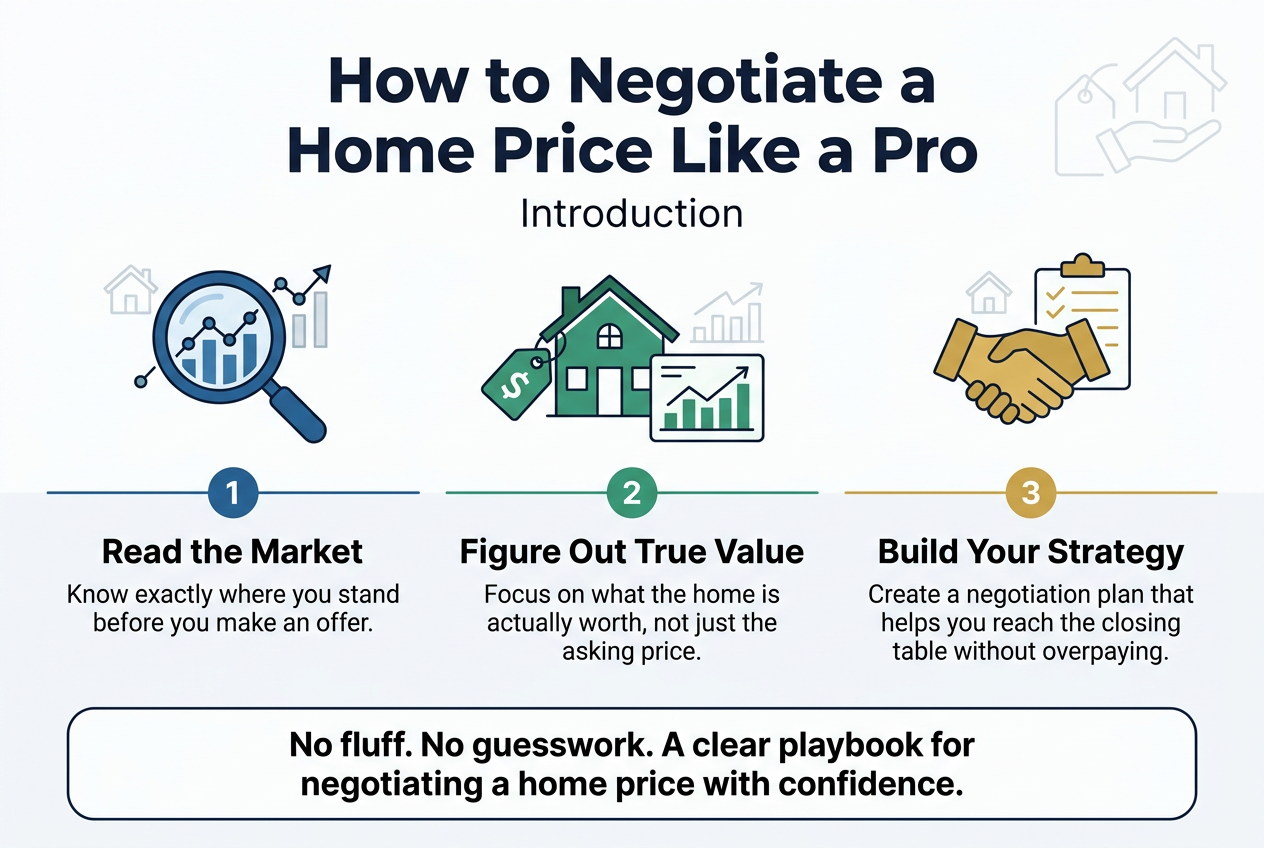
Buying a home is one of the biggest financial decisions you will make, and knowing how to negotiate a home price can make a significant difference in the overall cost of your purchase. As an Ontario-based REALTOR®, Parth Jani helps buyers understand the market, evaluate properties, compare opportunities and approach negotiations with a clear strategy. Whether you are a first-time home buyer, a growing family, or an experienced buyer looking for the right investment, the goal is not simply to offer less—it is to make an informed offer that reflects the property's true value and protects your financial interests.
Why Home Price Negotiation Matters
Many buyers assume that the listing price is the price they have to pay. In reality, the final purchase price can depend on several factors, including market conditions, comparable sales, property condition, seller motivation and how long the home has been on the market.
A successful negotiation starts with preparation.
Instead of asking, “How much below asking should I offer?”, a better question is:
“What is this home actually worth in today's market?”
Once you understand that number, you can build a much stronger negotiation strategy.
1. Research Recent Comparable Home Sales
One of the most important steps before making an offer is researching comparable properties, commonly known as “comps.”
Comparable sales are recently sold homes that are similar to the property you are considering. Ideally, look at homes that are similar in:
- Location and neighbourhood
- Square footage
- Number of bedrooms and bathrooms
- Lot size
- Age and overall condition
- Upgrades and finishes
Pay particular attention to recently sold properties, rather than relying only on current listings. A home may be listed for $950,000, but if similar properties have recently sold for $900,000, that information gives you a much stronger basis for negotiation.
For Ontario buyers, understanding local market conditions is especially important because pricing and buyer demand can vary significantly from one community to another.
Your REALTOR® can help you interpret comparable sales and determine whether a property appears fairly priced, overpriced, or potentially undervalued.
2. Understand Whether You Are in a Buyer's or Seller's Market
Market conditions can dramatically affect your negotiating power.
In a buyer's market, there may be more homes available relative to the number of buyers. Sellers may have to compete for attention, giving buyers more room to negotiate price, repairs and other terms.
In a seller's market, demand may be stronger than available inventory. In that situation, buyers may have less room to negotiate the purchase price and may need to make their offer more competitive.
A balanced market falls somewhere in between, giving both buyers and sellers reasonable negotiating opportunities.
The important thing is to understand the market before deciding how aggressively to negotiate.
A negotiation strategy that works in one Ontario neighbourhood may not work in another.
3. Pay Attention to Days on Market
Another valuable piece of information is days on market (DOM).
How long a property has been listed can provide clues about the seller's position.
A newly listed home may have strong buyer interest and limited negotiating flexibility. However, a property that has been sitting on the market for several weeks or months may provide more opportunity.
Longer market time can sometimes indicate:
- An asking price that is too high
- Limited buyer interest
- Property condition concerns
- Location challenges
- Changing seller circumstances
This does not automatically mean the seller will accept a low offer. However, it gives you another piece of information to consider when building your strategy.
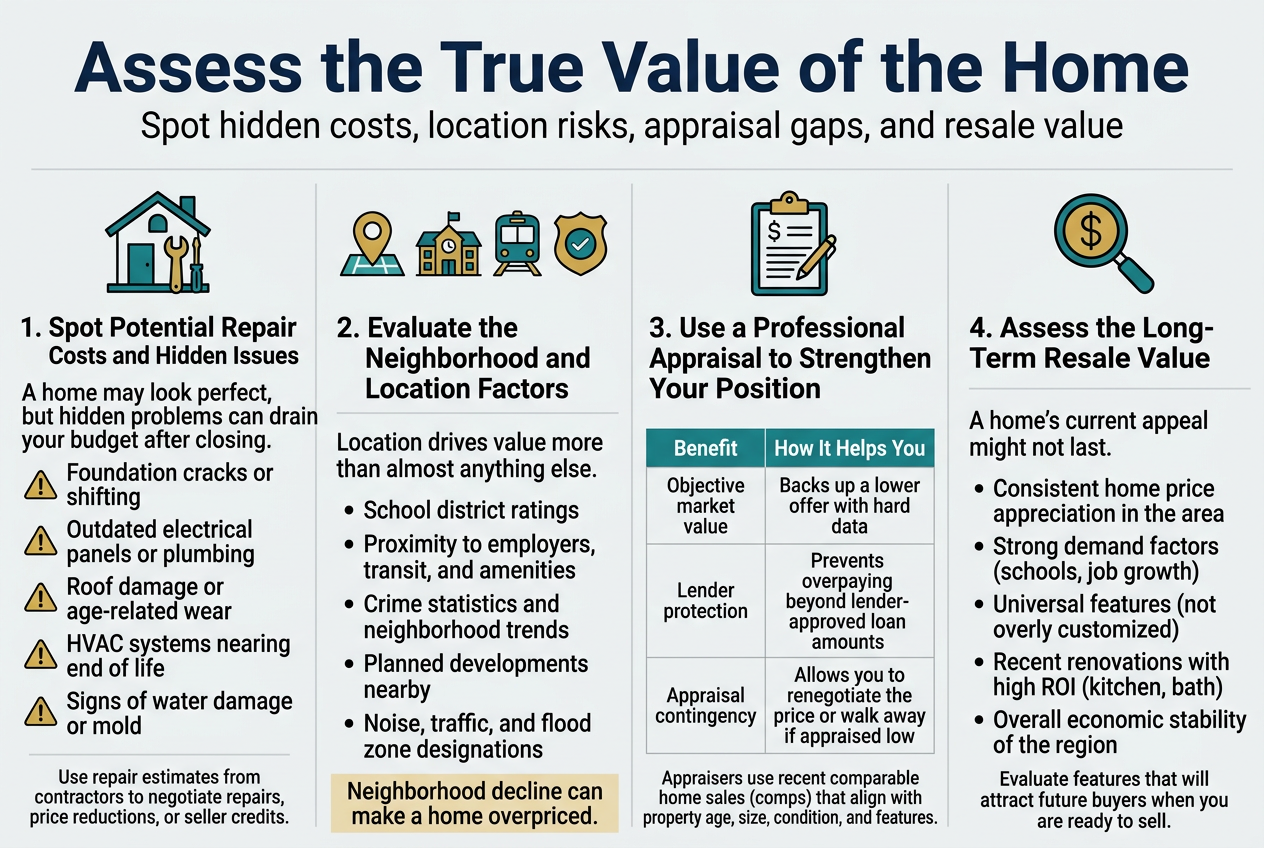
4. Determine the True Cost of the Property
The purchase price is not the only number you should consider.
A home that looks like a great deal at first may require significant repairs after closing.
This is why a professional home inspection can be an important part of the buying process.
An inspection may identify concerns involving:
- Roofing
- Foundation
- Electrical systems
- Plumbing
- HVAC
- Water damage
- Mould
- Other major systems
If significant issues are discovered, they may become part of the negotiation.
Depending on the circumstances, a buyer may request that the seller complete certain repairs, negotiate a price reduction, or request a credit where appropriate.
The strongest negotiation points are generally supported by documentation and realistic repair estimates—not simply a long list of cosmetic preferences.
5. Look Beyond the House Itself
A home's value is influenced by much more than the building.
Location matters.
Before making an offer, consider the surrounding neighbourhood and factors that could affect both your lifestyle and future resale value.
Look at:
- Access to major roads and transit
- Schools and educational facilities
- Employment opportunities
- Parks and amenities
- Traffic and noise
- Nearby development
- Neighbourhood trends
For example, two homes with similar sizes and features may have very different values because of their locations.
This is one reason working with a REALTOR® who understands the local Ontario market can be valuable. The numbers need to be considered in context.
6. Build a Strategic Offer
Once you understand the property and the market, you can build your offer.
Your offer should consider:
Recent comparable sales: What are similar homes actually selling for?
Days on market: How long has the property been available?
Property condition: Are there repairs or improvements that need to be considered?
Market conditions: Are buyers competing for properties, or do sellers have more inventory to work through?
Your budget: What is the maximum price you are genuinely comfortable paying?
The goal is to make a competitive but strategic offer.
Offering too aggressively can mean paying more than necessary. Offering unrealistically low can cause the seller to dismiss your offer entirely.
A good negotiation leaves room for discussion while remaining credible and financially responsible.
7. Don't Forget About Terms and Conditions
Price is only one part of a real estate negotiation.
Sometimes a seller may be willing to negotiate on other aspects of the transaction rather than reduce the price significantly.
Depending on the situation, buyers may negotiate elements such as:
- Closing date
- Included appliances or fixtures
- Inspection conditions
- Financing conditions
- Other agreed-upon terms
Conditions can also protect the buyer during the transaction.
For example, financing, inspection and appraisal conditions can provide important protection depending on the purchase and the buyer's circumstances.
Never waive an important condition simply because you want your offer to look stronger. Understand the risks first and discuss the implications with your REALTOR® and other appropriate professionals.
8. Use the Home Inspection as a Negotiation Tool
A home inspection should not simply be viewed as a checklist.
It can also help you understand whether the home deserves the price you are considering.
Focus your negotiation on significant issues rather than minor cosmetic items.
For example, an aging roof, major plumbing issue or electrical concern can have a meaningful financial impact. Asking the seller to address every small imperfection, on the other hand, can make negotiations unnecessarily difficult.
The best approach is to identify the issues that genuinely affect the property's value, safety or future costs.
9. Keep Your Emotions Under Control
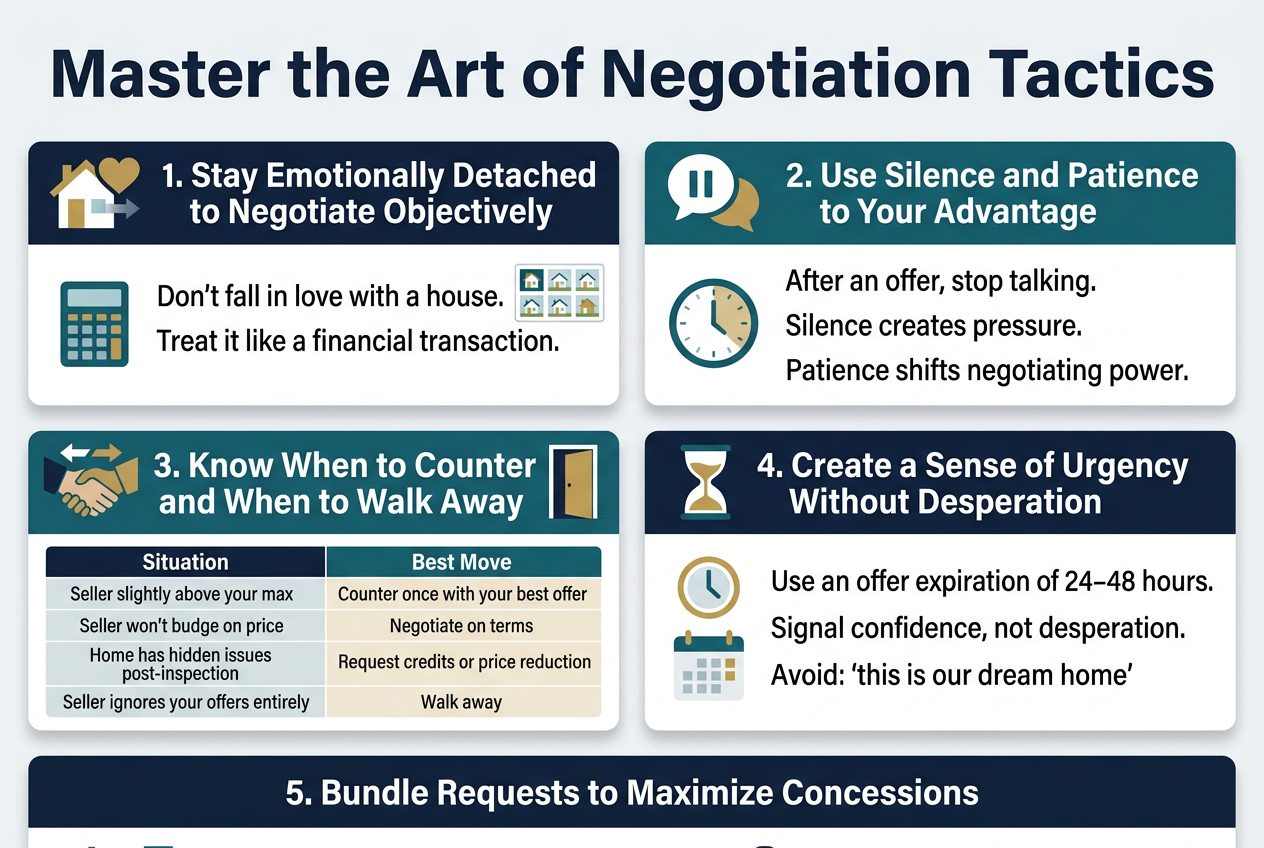
One of the easiest ways to overpay for a home is to become emotionally attached.
You may love the kitchen, the backyard, the neighbourhood or the layout—but remember that you are making a major financial decision.
Try to remain objective.
Ask yourself:
Does the property make financial sense at this price?
What do comparable homes tell me?
What will this home potentially be worth in the future?
Am I comfortable with the monthly and overall cost?
Keeping your emotions under control gives you greater flexibility during negotiations.
If the numbers stop making sense, you should be prepared to walk away.
10. Know When to Walk Away
Not every negotiation needs to end with a deal.
Sometimes the smartest decision is to walk away.
If a seller refuses to negotiate despite significant property concerns, or if the purchase price moves beyond your comfortable budget, don't feel pressured to continue simply because you have already invested time in the property.
There will always be another property.
Walking away can actually strengthen your position because it shows that you have a limit and are willing to protect it.
The objective isn't to “win” the negotiation.
The objective is to purchase the right property at a price and terms that make sense for you.
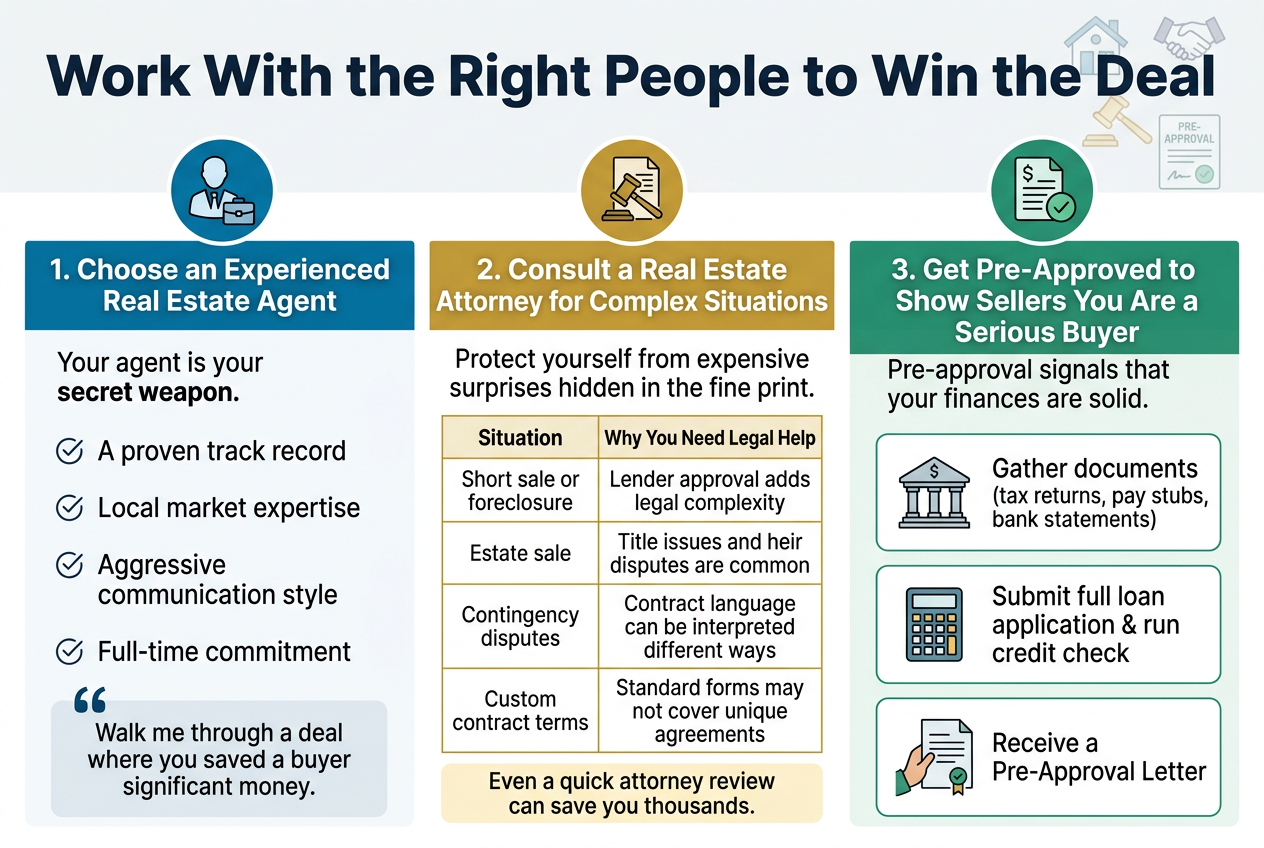
11. Get Pre-Approved Before You Start Shopping
If you are financing your purchase, getting mortgage pre-approval before making offers can make the process much smoother.
A pre-approval helps you understand your purchasing range and demonstrates to sellers that you are a serious buyer.
It can also help you avoid falling in love with a property that doesn't fit comfortably within your financial plan.
Knowing your budget before negotiating gives you an important advantage: you already know where your limit is.
12. Work With an Experienced Ontario REALTOR®
A successful home negotiation involves more than simply deciding on an offer price.
An experienced REALTOR® can help you:
- Review comparable sales
- Understand local market conditions
- Evaluate the property's position in the market
- Structure an offer
- Identify negotiation opportunities
- Navigate counteroffers
- Help you remain focused on your budget
For Ontario buyers, local knowledge can be particularly valuable because different cities, neighbourhoods and property types can behave very differently.
The right professional can help you look beyond the listing and understand the bigger financial picture.
Final Thoughts: Negotiate With Confidence
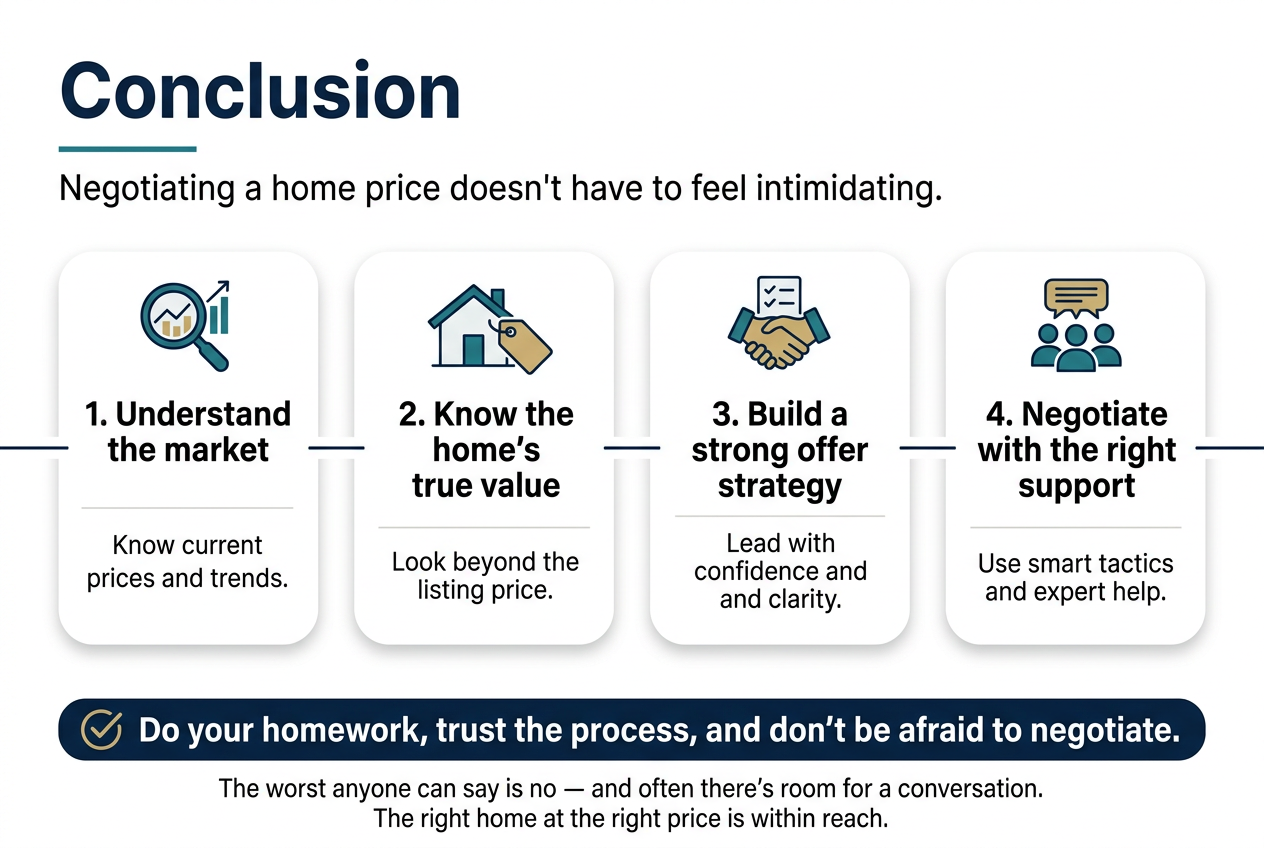
Learning how to negotiate a home price doesn't mean trying to get the lowest possible number at any cost.
It means doing your homework.
Understand recent sales. Study the local market. Look at days on market. Evaluate the property's condition. Consider future resale value. Protect yourself with appropriate conditions and, most importantly, know your financial limit.
A smart buyer doesn't negotiate based on emotion—they negotiate based on information.
If you're planning to buy a home in Ontario, having the right strategy before you start making offers can put you in a much stronger position.
Ready to Buy a Home in Ontario?
If you're considering buying a resale home, exploring pre-construction opportunities, or simply want to understand what your budget can get you in today's Ontario market, Parth Jani can help you explore the right opportunities and build a strategy around your goals.
With local market knowledge and connections across the Ontario real estate and builder community, Parth can help you compare opportunities and identify properties that fit your budget and long-term plans.
Let's find the right home at the right price.
📞 Parth Jani | Ontario REALTOR®
647-907-6386
parth@janirealty.ca
www.parthjani.com