
If you're earning $80,000 a year and house-hunting in Hamilton, here's the number to know: you can typically qualify for a home priced around $330,000 to $335,000. That might come as a surprise when the average home in Hamilton is currently selling for $741,172. So what's behind that gap, and what can you actually do about it? Let's break it down.
Hamilton's Market Has Cooled, But Not Enough
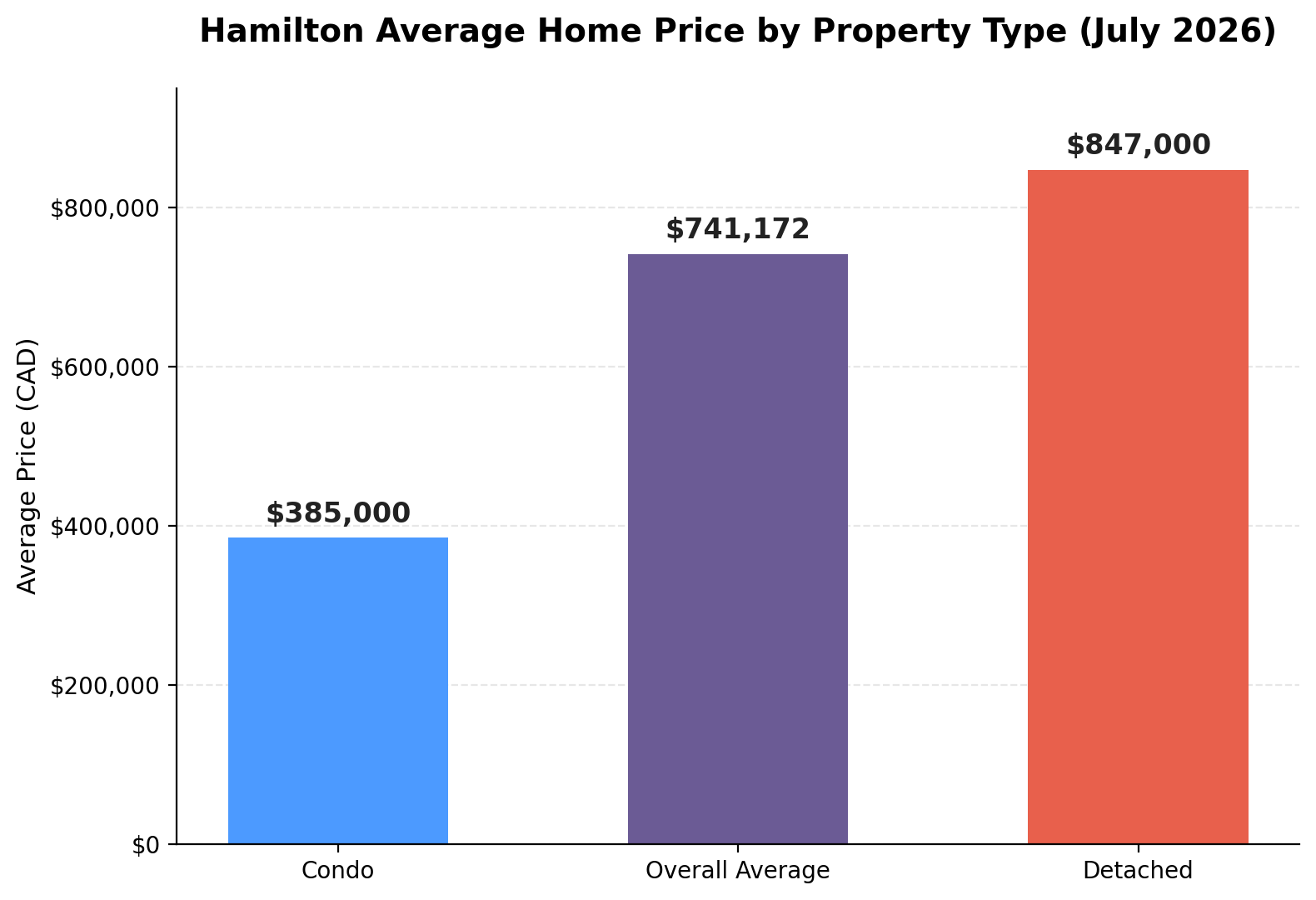
Hamilton's housing market isn't the runaway freight train it was back in 2022. As of July 2026, the region's average home price sits at $741,172, down 3.4% from a year earlier, and the benchmark price has dropped nearly 5% year-over-year. That's real cooling.
But "cooling" doesn't mean "affordable." Detached homes are still averaging $847,000–$849,000, basically flat from last year. Condos have come down more meaningfully, averaging around $385,000, roughly 10% cheaper than a year ago. That condo price is the closest thing to a realistic target for an $80,000-income household, and even that sits about $52,000 above what most buyers at that income level can actually qualify for.
Why Your Income Doesn't Stretch as Far as You'd Think
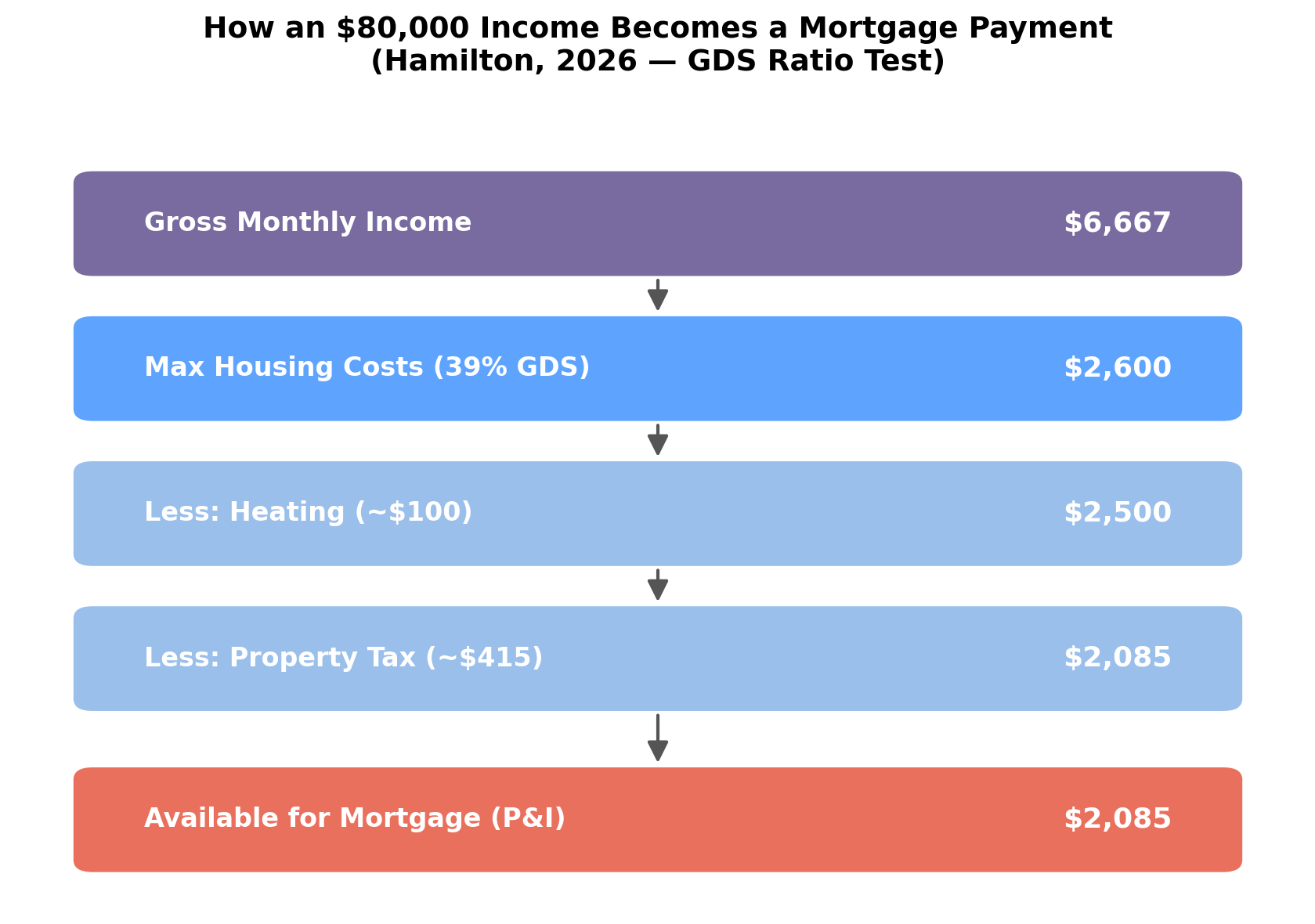
The reason isn't just home prices; it's how mortgage math works in Canada. Every federally regulated lender has to stress-test you at a rate higher than what you'll actually pay. Right now, that qualifying rate sits around 6.24%, even though real five-year fixed rates are closer to 4.24%.
On top of that, lenders cap your housing costs (mortgage, property tax, heating, and half of any condo fees) at 39% of your gross monthly income. That's called the Gross Debt Service ratio, and for most buyers, it's the number that ultimately decides how much house they can afford.
Run the math for an $80,000 household with no other debt, a 5% down payment, and a 25-year mortgage, and you land at a maximum mortgage of about $316,000, or a purchase price of roughly $333,000 once the down payment is factored in. Here's the part worth noting: at the actual contract rate of 4.24%, the real monthly payment would only eat up about 33% of gross income. The stress test intentionally builds in a cushion in case rates rise or the mortgage needs to be renewed later at a higher rate.
What It Actually Takes to Afford Hamilton's Average Home
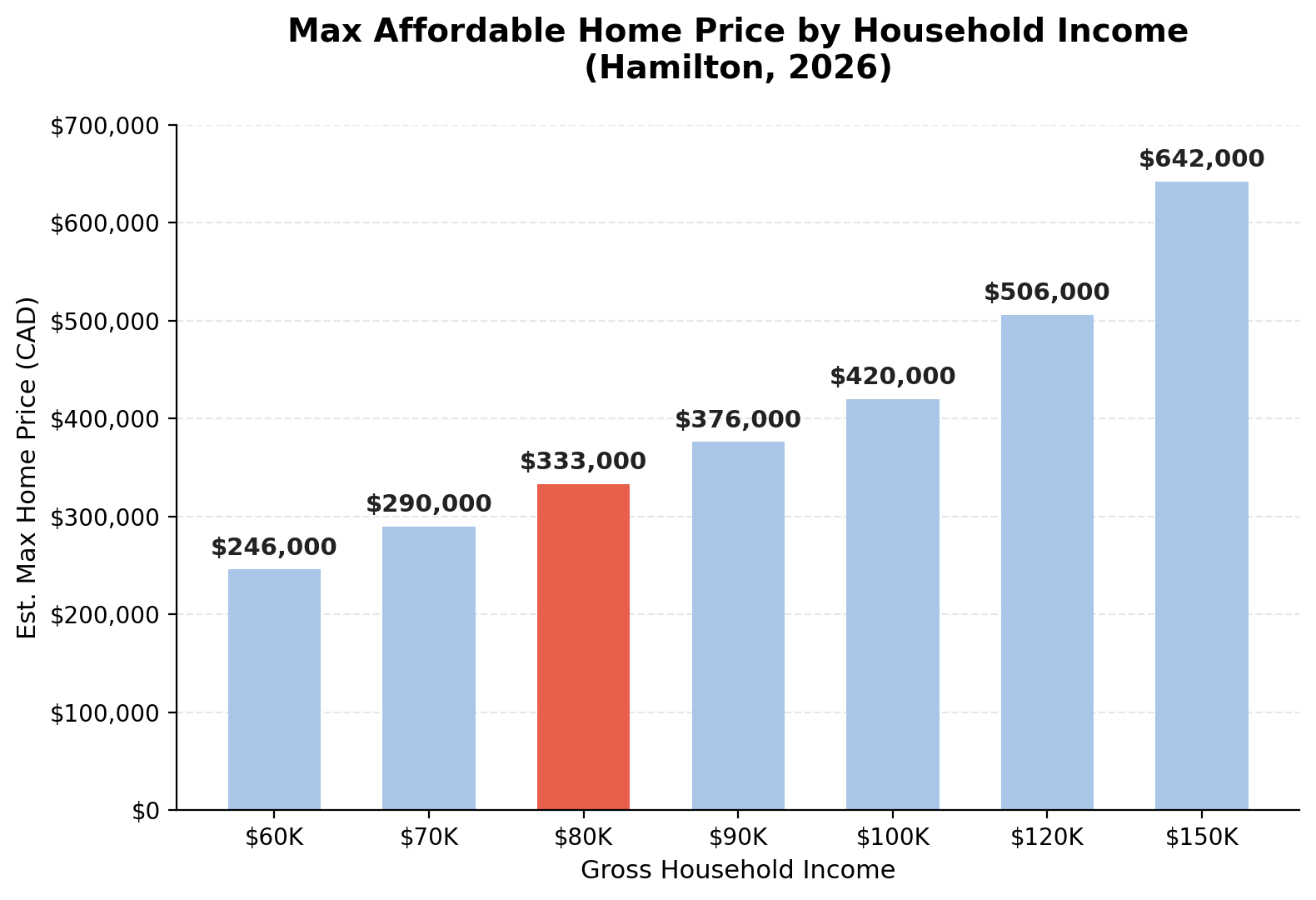
Income and affordability scale together, but not always in the way people expect. Here's roughly what different household incomes can afford in today's Hamilton market, using the same assumptions:
- $60,000 → about $246,000
- $70,000 → about $290,000
- $80,000 → about $333,000
- $90,000 → about $376,000
- $100,000 → about $420,000
- $120,000 → about $506,000
- $150,000 → about $642,000
Notice that it takes roughly double the income, around $150,000, to comfortably reach Hamilton's current average home price. That's the affordability gap in a single statistic.
Closing the Gap: What Actually Moves the Needle
The good news is that $80,000 doesn't have to be a hard ceiling. A few levers can meaningfully change what you qualify for:
Bring in a co-borrower. Combining incomes with a partner or family member directly increases the amount lenders will qualify you for, since GDS and TDS are calculated on household income.
Deal with existing debt first. Car payments, student loans, and credit card balances all count against your Total Debt Service ratio. Clearing even modest debt can free up real borrowing room.
Save a bigger down payment. This won't change your qualifying rate, but it reduces how much you need to borrow for the same home, and pushing past 20% down eliminates mortgage default insurance premiums altogether.
Consider a shorter fixed-rate term. Since the stress test is calculated as your contract rate plus 2%, a lower rate on a shorter term can sometimes reduce the qualifying rate you're tested against.
Widen your search beyond detached homes. Condos and townhouses in areas like Stoney Creek or the East Mountain tend to sell well below the citywide average, and are often the most realistic entry point for buyers in this income range.
The Bottom Line
An $80,000 income buys meaningfully less house than Hamilton's headline average price suggests, covering less than half of the typical home's value today. But the math isn't fixed. A larger down payment, a co-buyer, or a shift toward condos in more affordable pockets of the city can close a lot of that gap. The smartest next step is getting pre-approved with a mortgage broker or REALTOR® who can run these numbers against your actual credit profile and today's live rates, rather than relying on general estimates like these. Curious where your income lands? Talk to Parth about your options